
Gavin Esler
Gavin Esler is a broadcaster, journalist, novelist, university chancellor and we are proud to have him as a patron of the Association.
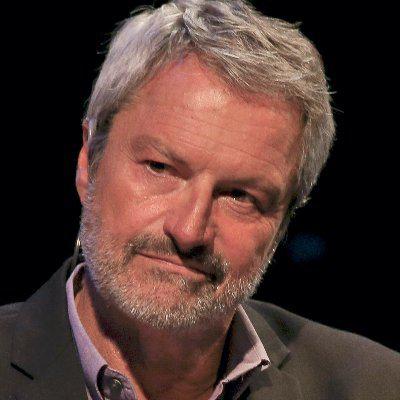
I think our imperial madness is as idiotic as suggesting the British people should abandon the future of electric cars and instead be content to buy ourselves a horse and cart. Or perhaps the British army should abandon assault rifles and retrain with flintlock muskets instead. Or, is there any point in me writing this on my laptop when a quill pen is undoubtedly a serviceable alternative?
The sad truth is that British imperial madness is rooted in a very British idiocy, nostalgic pessimism. There are those – and the British government minister Jacob Rees-Mogg is one prominent example – for whom everything in the past was somehow “better” that the present and everything in the future suspected of being inevitably even worse. Rees-Mogg epitomises British nostalgic pessimism. He recently ordered a review into whether imperial measures should be reintroduced in those areas where they have already been phased out.
Google was invented in 1998, and if Mr Rees-Mogg were to Google where imperial measures are currently still used he would find three countries outside the UK. These are the USA, Liberia and Myanmar. But even this is misleading. As someone who lived in the US for many years I can state clearly that an American gallon (and that of Liberia, which takes its cue from the USA) is very different from a British imperial gallon. Indeed the US has always been confused about its own system. For example, the biggest American artillery piece in World War Two was the 240mm howitzer – defined in metric terms. But it fired a 360lb shell up to 25,000 yards. The Americans, in other words, have imperial-style names mixed up with metric names, and, like the British, have not yet committed to join the rest of the world in the 21st century by entirely embracing the far simpler and less confusing metric system. And since the British imperial system remains very different from that of the United States and Liberia, Jacob Rees-Mogg appears to wish in the 21st century Britain should consider adopting a system related to that of Myanmar, a military dictatorship which, undoubtedly, the nostalgic pessimists still call “Burma”.
Those of us who prefer to take Britain forward into the 21st century rather than backwards to Tudor times recognise that only a fully metricated United Kingdom can be fit for the future. As for the nostalgic pessimists, perhaps Mr Rees-Mogg as “Brexit Opportunities Minister” may wish to investigate the trading opportunities with Mesopotamia, Cathay and the Ottomans.
Gavin was born in Glasgow. He is a graduate of the University of Kent (English and American literature) and later completed an MA in Anglo Irish literature at the University of Leeds.
His journalistic career started with the Belfast Telegraph, from which he moved on to become a BBC Northern Ireland reporter and later the BBC’s chief North America correspondent. He has been a presenter and anchor on Newsroom South East, BBC News 24, Dateline London, Four Corners, Film Review and, from January 2003 until January 2014, he was a main presenter on BBC Two’s flagship political analysis programme, Newsnight. He has also presented BBC News at Five on the BBC News Channel. In 2017, he left the BBC to concentrate on his writing activities, but returned later as host of Talking Books.
During his journalistic career he has interviewed a huge range of public figures, including among others Bill Clinton, Jacques Chirac, King Abdullah II of Jordan, Dolly Parton, Doris Lessing, Penélope Cruz, Angelina Jolie, V. S. Naipaul, Roger Waters, Vikram Seth and Seamus Heaney.
Gavin’s report on the military build-up in the Aleutian Islands as part of the Reagan administration’s New Maritime Strategy earned him a Royal Television Society award.
His writing career includes five novels and four non-fiction books, the most recent, How Britain Ends – English Nationalism and the Re-birth of Four Nations, was published in February 2021. In it Esler argues that a resurgent English nationalism is pulling the United Kingdom apart.
In 2007 he won a Sony Gold Award for his radio documentary report Letters from Guantanamo on Sami al-Hajj, one of the detainees in Guantanamo Bay. Following the broadcast, al-Hajj was released from American custody.
Gavin has received two honorary degrees from the University of Kent: an honorary MA was awarded in 1995, followed by an honorary Doctorate in Civil Law in 2005. He has two further honorary doctorates, from the University of York and Glasgow Caledonian University. Since 2014 he has served as the Chancellor of the University of Kent.
Gavin Esler is a man well known for speaking his mind and has been a powerful supporter of many worthy causes. His political engagement included standing for the Change UK party in the 2019 European Parliament elections.
Further information
About Gavin: gavinesler.com
Bluesky: @gavinesler.bsky.social
Twitter: @gavinesler
Professor Jim Al-Khalili
Jim is a multiple award-winning science communicator renowned for his public engagement around the world through writing and broadcasting. UKMA is proud to have him as a patron of the Association.
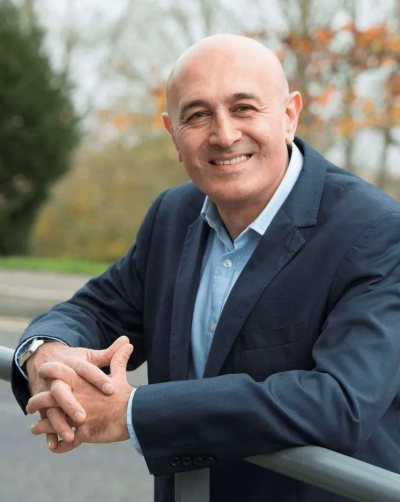
As a scientist, using the metric system on a daily basis is for me more than just a matter of ideology, convenience or a badge of honour showing off my credentials as a progressive global citizen in the modern world. Rather, it is the only way I am able to do good science and develop my understanding and knowledge of the universe.
To my mind, those who resist embracing this utterly sensible measuring system are in a way being antiscientific. While I find it amusing, I am in fact rather delighted when my students admit that they have no idea how long a yard is. This confirms to me that our education system is working.
I do hope that those outmoded – dare I say sometimes even xenophobic – voices calling for a return to the outdated Imperial system fade away and are ignored. While Imperial units themselves can be retained for amusing quiz questions like, “How many chains are there in a furlong?”.
Jim is a leading academic, based at the University of Surrey where he holds a Distinguished Chair in physics as well as a university chair in the public engagement in science. He has made fundamental contributions to theoretical physics, particularly in nuclear reaction theory, quantum effects in biology, open quantum systems and the foundations of quantum mechanics. He received his PhD in nuclear reaction theory in 1989 and has published widely in this field. His current interest is in open quantum systems and the application of quantum mechanics in biology.
Jim has written 14 books on popular science and the history of science, between them translated into twenty-six languages. His latest book, “The World According to Physics”, was shortlisted for the Royal Society Book Prize.
He is a presenter of TV science documentaries, such as the BAFTA nominated “Chemistry: A Volatile History”, and hosts the long-running weekly BBC Radio 4 programme, “The Life Scientific”, in which he excels at making the work of distinguished scientists accessible to the public.
Jim is a past president of the British Science Association and a recipient of the Royal Society Michael Faraday medal and the Wilkins-Bernal-Medawar Medal, the Institute of Physics Kelvin Medal and the Stephen Hawking Medal for Science Communication. He received an OBE in 2007 and a CBE in 2021 for ‘services to science’.
On seeing a video of Jacob Rees-Mogg mocking social distancing rules, Jim tweeted:
Further information
About Jim: jimal-khalili.com
Bluesky: @jimalkhalili.bsky.social
Twitter: @jimalkhalili
Dick Taverne, Baron Taverne, KC
Sadly our longest-serving patron, Lord Dick Taverne, died at the age of 97 on 25 October 2025. He will be greatly missed.
There is an obituary on Metric Views: Obituary – Dick Taverne, Baron Taverne, KC
 UK Metric Association