
Baron Neil Kinnock
An Imperial UK in the EU was an eccentricity. A “Global” UK without metric measures is a serious disadvantage. Change is now urgent.
September 2024
40 years after Britain first started to go officially metric, there is one important area in which we are still living in the imperial past. We see this in the muddle of measurement units in use in the United Kingdom. Our road signs are perhaps the most obvious example and they contradict the image – and the reality – of our country as a modern, multicultural, dynamic place where the past is valued and respected and the future is approached with creativity and confidence.
Of course, it is not just a question of Britain’s image. The persistence of miles, yards, feet and inches on road signs is a continuing obstacle to people being able to “think metric” in other areas of life – from shopping to health and safety, from DIY to calculating their petrol consumption or understanding the weather forecast.
It is obvious that every country needs a single system of weights and measures which people of all ages, backgrounds and origins, can understand and use and it is equally clear that nobody needs two systems. For the younger generations who have full command of metric measurement as a result of their schooling, the continuation of the imperial system is confusing as well as quaint. For older people like me, a reasonable transition period would minimise the difficulties of change.
It is widely believed – largely because of distortive press coverage – that weights and measures policy is primarily a European issue. It is not. In the ten years that I was a European Commissioner (including five years with the Transport portfolio), I know that there was no pressure from the Commission on any British Government to convert UK road signs. Indeed, the EU agreed many years ago that the United Kingdom and Ireland should set their own timetables for phasing out the remaining imperial measures. The issue is therefore entirely a matter for the British Government and Parliament.
Sadly, the truth is that, although most senior politicians are well aware that the current dual system has serious practical disadvantages, successive British Governments have been reluctant to take responsibility for bringing the excruciatingly slow metric changeover to a decisive conclusion. It was originally intended to convert British road signs in 1973, but the change was postponed and then never re-instated.
Foreword – Metric Signs Ahead, 2006
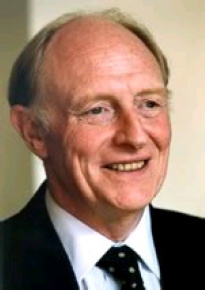
Baron Neil Kinnock is somebody who can validly be described as one of this country’s elder statesmen. He has had a distinguished career both in the UK and on the European stage.
He was born in South Wales to a mining family in 1942 and studied in Cardiff, where in 1965 he got his degree in industrial relations and history. He subsequently spent four years as a tutor for a workers’ educational association.
In 1970 he was elected as Labour MP for Bedwellty (later known as Islwyn). He joined the shadow cabinet in 1979 as education spokesman. Following the Labour election defeat of 1983 and Michael Foot’s resignation, Kinnock became party leader. Although on the left of the party, he campaigned for modernisation and against the dominance of Militant Tendency and the NUM. He stood down as leader after the unexpected Labour defeat to John Major in 1992. In 1995 he was appointed as one of the two UK members of the European Commission, where he had responsibility for transport and subsequently served as Vice-President.
Following his return to the UK he became head of the British Council in 2004 and entered the House of Lords as Baron Kinnock of Bedwellty the next year. He was joined in the Lords in 2009 by his late wife Glenys. Their son Stephen is currently MP for Aberavon and is shadow immigration minister.
Lord Kinnock has continued to speak out on causes in which he believes, including the value of links with Europe – indeed his views have evolved since the 1970s when he opposed EEC membership. Although formerly an opponent in principle of the House of Lords, he recognises its value in providing a platform for people of wisdom and experience to be heard.
Although sometimes a controversial figure over the years, he is a man who is admired and respected across the political spectrum, within the UK and beyond.
 UK Metric Association